




Quick Answer
To find an automatic litter box that genuinely controls odor, keep these four principles in mind:
| Dimension | Key Indicators | Why It Matters |
|---|---|---|
| 1. Sealing Structure | Independent waste drawer, sealed lid, sealing strips, no odor-leaking gaps | The physical first line of defense against odor escaping into your home |
| 2. Cleaning Speed | Sensor response time, adjustable delay settings | Compresses waste fermentation time, reducing VOCs generation |
| 3. Odor Neutralization | Physical adsorption and chemical decomposition synergy | Targets odor at the source rather than masking it with fragrance |
| 4. Anti-Stick Design | Anti-stick coating, streamlined design, no dead corners | Eliminates lingering odor caused by urine buildup |
Products that perform well in these four dimensions achieve systematic litter box odor control. For which specific products excel in these areas and how to get rid of litter box odor in your specific household scenario, we will break this down in the sections that follow.
The Real Source of Litter Box Odor — Time and Temperature
Volatile Organic Compounds: Why Time Makes Odor Worse
The smell from litter boxes essentially comes from volatile organic compounds (VOCs) released during the decomposition of cat waste.
According to the 2021 Separations journal study:
- Fresh cat urine: 21 volatile compounds detected
- Stale cat urine: Increased to 34 compounds, a 62% increase
This means time directly determines odor complexity. The longer waste remains in the open, the more odor molecules are produced, and the harder the smell is to control.
A note on feces: The same study found that fresh cat feces contained 64 volatile compounds, while stale feces contained only 12. This suggests a different odor profile from urine: feces are most pungent immediately after deposit, but any residue that remains can embed itself into surfaces and produce a stubborn, lasting smell.
Temperature: The Accelerator of Odor Release
Higher ambient temperatures increase the activity of VOC molecules, causing them to off-gas more rapidly. This explains two common experiences:
- Why do litter boxes smell significantly worse in summer
- Why can even a box that's scooped daily can develop a deep, stale odor over time if the base and walls are never properly cleaned
Core insight: Effective odor control isn't about masking smell. It's about minimizing how long waste is exposed to open air in the first place.
Automatic vs. Manual Litter Boxes: Which is Best Litter Box for Odor Control?
Manual Litter Boxes: Entirely Dependent on Human Consistency
With a traditional litter box, odor control comes down almost entirely to three variables:
- Scooping frequency — once a day, or immediately after every use
- Maintenance depth — whether you do full litter replacements and scrub the box regularly, or just scoop clumps while the base goes unwashed
- Litter quality — clumping performance, odor absorption, and dust control
The fundamental limitation: even the most diligent cat owner can't be on call 24/7. That unavoidable delay between use and cleaning is why manual litter boxes are so much harder to keep odor-free.
Automatic Litter Boxes: The Best Cat Litter Box for Odor Control
Self-cleaning litter boxes address odor through three complementary mechanisms:
| Mechanism | Function | Effect |
|---|---|---|
| Instant Cleaning | Sensor-triggered, minute-level response | Compresses the odor window from hours to minutes |
| Sealed Containment | Independent waste drawer with sealing structure | Blocks odor back-diffusion into living spaces |
| Active purification | Activated carbon, odor-neutralizing modules | Continuously reduces residual odor concentration |
This means automatic litter boxes create systematic advantages over traditional litter boxes in three dimensions: time compression, spatial isolation, and continuous purification. "Fresher air" isn't subjective feeling — it's the inevitable result of physical design.
4 Design Dimensions for Best Cat Litter Box for Odor Control
Cleaning Speed: Sensor Response and Cleaning Modes
The time urine and feces spend in litter directly determines odor molecule release. The core advantage of the best cat litter box for odor control: replacing human delayed cleaning with machine-driven shorter intervals.
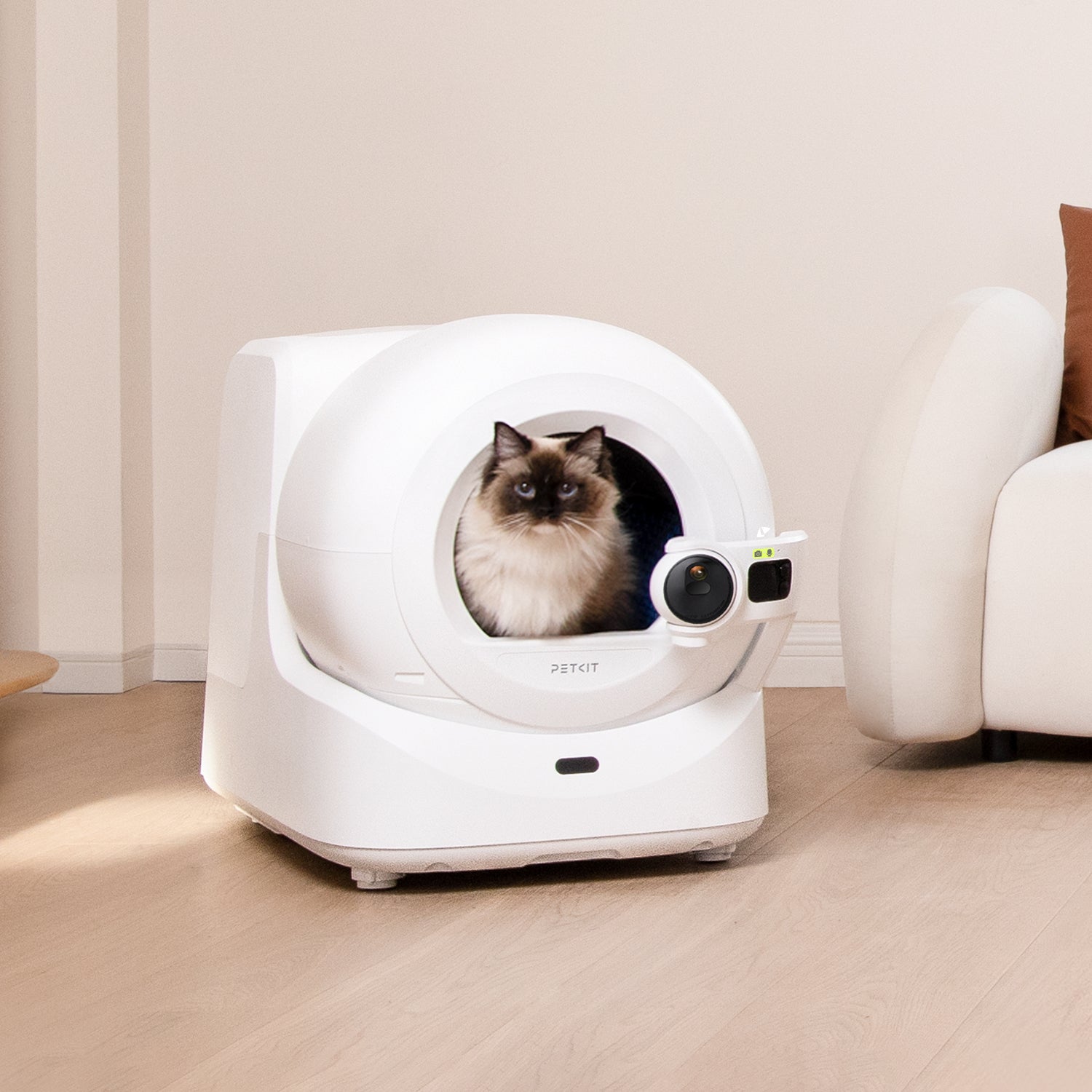
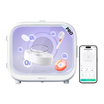
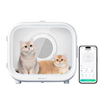
Different cleaning methods also affect odor control. If soft stool isn't promptly and properly wrapped, odor release continues to diffuse. The advanced litter box offers different cleaning modes for different waste types. For example, the PETKIT automatic litter box series allow selecting a "soft stool mode" via app — first fully wrapping soft stool before cleaning, which is not only cleaner but also reduces odor leakage.
Waste Drawer Design and Sealing
The waste drawer is the second line of odor control defense.
Checklist:
- Is the drawer structure independent (not open-style)?
- Does the waste bag fully isolate contents (not half-wrapped)?
- Is there a sealed lid or double-layer structure on top?
- Are gaps equipped with sealing strips (silicone/rubber material)?
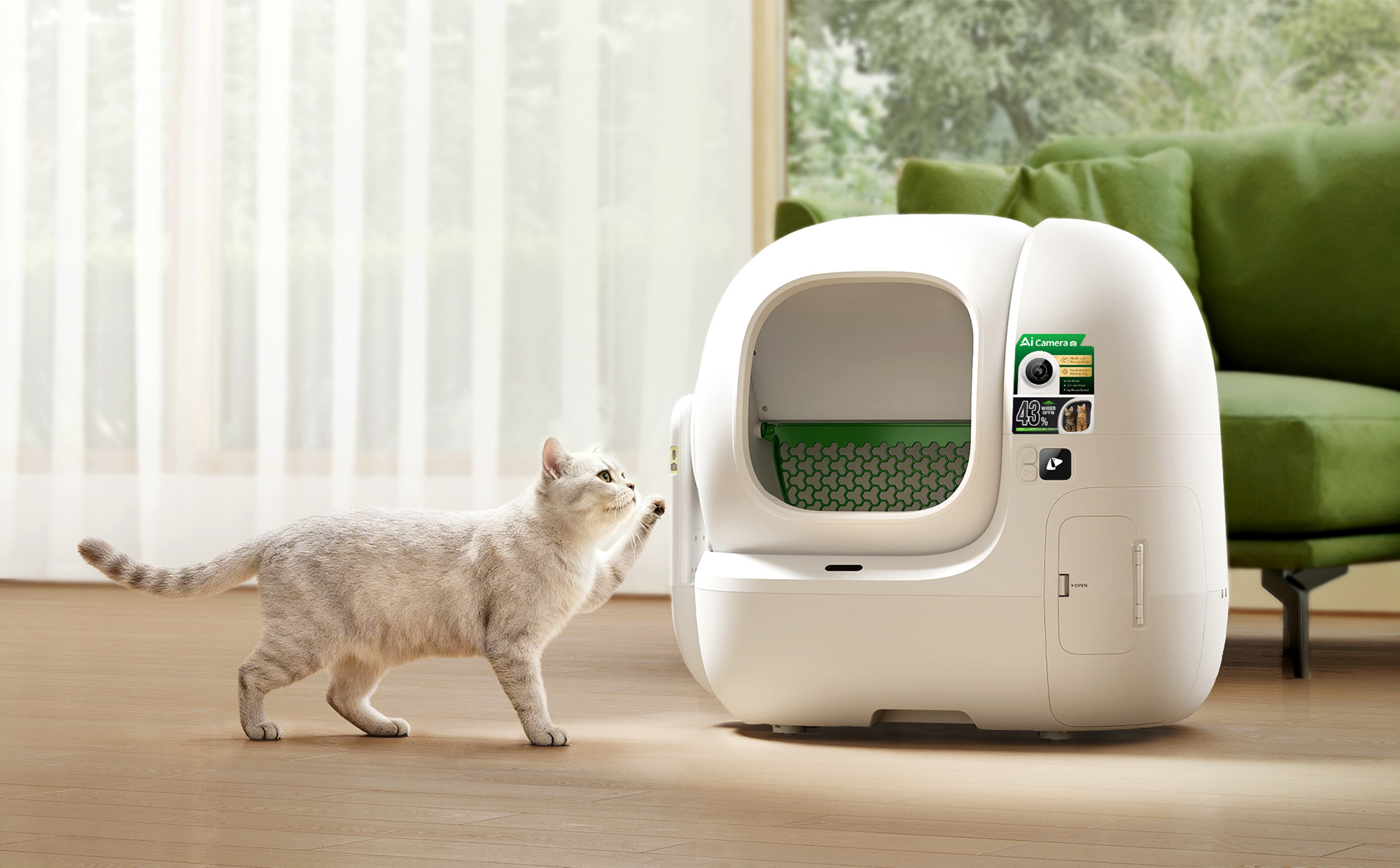
Premium models typically stack multiple sealing layers here. The Purobot Ultra Automatic Litter Box, for instance, combines an independent waste compartment, a sealed lid, and a built-in odor-eliminating module with its fully automated waste packing system — a four-stage approach that addresses every point on this checklist. The design logic is cohesive: each layer compensates for the limits of the last, achieving a high standard of physical odor isolation.
Deodorizing Devices: Filters, Activated Carbon, Deodorizers
Activated carbon filters, adsorption screens, and deodorizer boxes are essentially "consumable" solutions. Fragrance masking or spray solutions carry even greater risks: unfriendly to cats' olfactory systems, and prone to creating "chemical mixed odors."
Truly effective deodorizing requires physical adsorption combined with chemical decomposition mechanisms, not single masking. This also means the design logic of deodorizing modules (ease of replacement, expiration warnings) is an important indicator of product maturity.
Material Craftsmanship: Anti-Stick Structural Design
Sticky urine on the basin bottom, urine leakage, and difficult cleaning all lead to persistent urine odors in the litter box.
This requires the best cat litter box for odor control to deeply coordinate anti-stick coatings, streamlined design, and contact surface materials with automated mechanisms — also a key detail distinguishing product grades.
Core Conclusion — Choosing the Right Product for Better Odor Control
For cat owners who genuinely care about keeping their home odor-free, here's the honest conclusion: a self-cleaning litter box that gets the fundamentals right — cleaning logic, waste compartment sealing, odor neutralization, and anti-stick construction — has already solved the majority of the odor problem.
Compared to a traditional manual tray, the advantages are structural, not cosmetic: instant cleaning eliminates the exposure window, a sealed compartment blocks diffusion, and an active purification system handles what remains. These aren't marketing claims — they're predictable outcomes of sound physical design, which is why automatic litter boxes are inherently better odor management tools.
Once you understand these four evaluation dimensions, the next question becomes: which specific products actually perform well across all of them?
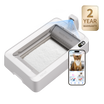
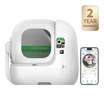
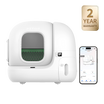
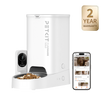
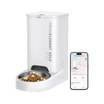
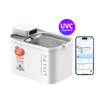
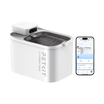
We tested all four PETKIT automatic litter boxes — from the entry-level PuraMax 2 Automatic Litter Box to the flagship Purobot Ultra Automatic Litter Box — and found meaningful differences in sealing architecture, odor neutralization systems, and cleaning logic that make each model better suited to different household needs: single-cat vs. multi-cat, compact apartments, frequent travelers, and more.
In our next article, "2026 Best Deodorizing Automatic Cat Litter Box Buying Guide: PETKIT Full Line Deep Comparison," we'll apply this four-dimension framework to break down how each model compares — and give you specific recommendations based on your situation.
FAQ
Q1: How do I evaluate the odor control performance of an automatic litter box?
We recommend using the Four-Dimension Checklist to assess any model in person:
- Seal test: Open the waste compartment drawer and check for any noticeable odor escaping. A well-designed unit should be nearly odorless at this point.
- Cleaning speed: Check whether the minimum cleaning delay can be set to 5 minutes or less via the app or control panel.
- Odor neutralization breakdown: Identify whether the deodorizing module uses physical adsorption (activated carbon, zeolite) or chemical masking (fragrance).
- Residue check: Inspect the interior drum material — a non-stick coating is meaningfully better than bare plastic — and look for any recessed corners or grooves where waste could accumulate and go uncleaned.
A model that passes all four checks has reached a mature standard of odor control design. For specific model recommendations matched to different household setups, see our follow-up buying guide.
Q2: Are automatic cat litter boxes really better at deodorizing than manual ones?
Automatic litter boxes combine immediate cleaning (response time measured in minutes), sealed containment (physical isolation of waste), and active odor neutralization (continuous purification) into a system that open manual trays simply cannot replicate. No matter how diligently you scoop a manual box, you can't overcome its fundamental limitation: waste sits exposed, and odor diffuses freely until you intervene. An automatic litter box closes that window by design.
Q3: How critical is "instant cleaning" for automatic litter box deodorizing?
This is the primary technical watershed for odor control.
Research shows that fresh cat urine contains 21 volatile organic compounds; stale urine contains 34 — a 62% increase driven entirely by time. Automatic litter boxes compress the cleaning interval from the human-scale "several hours" down to "a few minutes," sealing waste away before odor molecules have a chance to fully off-gas. This breaks the fermentation chain at the source.
We recommend setting cleaning delays to 5-10 minutes: allowing sufficient time for soft stool to clump while maximizing fermentation time compression for optimal litter box odor control.
Q4: Does an automatic litter box control odor effectively in a multi-cat household?
Better than the alternative — and in a multi-cat home, it's less of a luxury and more of a necessity.
With multiple cats, waste accumulates significantly faster. The high-frequency automated cleaning and sealed waste containment of a self-cleaning litter box deliver far more consistent odor control than manual scooping can sustain at that volume.
Setup recommendations for multi-cat households:
- Choose a model explicitly rated for multi-cat use, with a larger waste capacity and a cleaning logic designed for higher usage frequency
- Follow the one box per two cats guideline to avoid overloading any single unit
- Prioritize models with stronger odor control architecture — in a multi-cat environment, the difference in sealing and neutralization design becomes much more noticeable.