










For pet owners, safety is always the first consideration when choosing an automatic litter box. But with so many options and technical specs, what actually determines whether a product is truly safe?
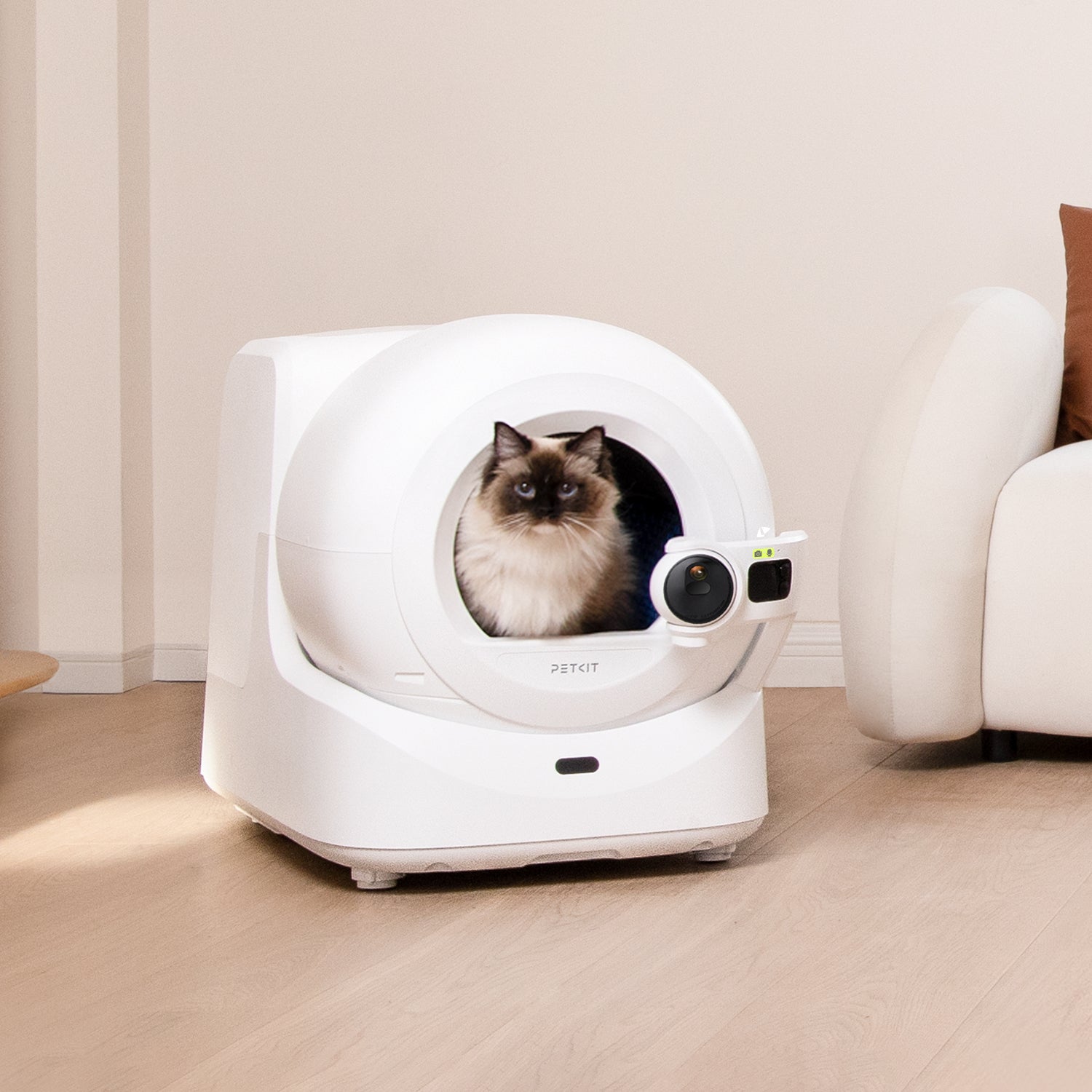
At PETKIT, we believe true safety must be physically built into the structure—meaning the entrance remains permanently open with zero pinch points.
Short Answer
Only automatic litter boxes with physically open entrances and zero mechanical pinch points are inherently safe. Sensor-based safety is inherently reactive and can fail under certain conditions. This article shares our evaluation framework for assessing structural safety in automatic litter boxes.
Table of Contents
- Two Golden Rules for Evaluating Automatic Litter Box Safety
- PETKIT's Structural Safety Engineering: Four Product Architectures
- Comparative Safety Overview: PETKIT Automatic Litter Boxes
- Why Physical Structure Is the Only Reliable Safety Standard
- How to Check If a Litter Box Is Truly Safe (Before You Buy)
- Safety Starts with Design
Two Golden Rules for Evaluating Automatic Litter Box Safety
Regardless of brand or model, structural safety can be accessed using two fundamental principles:
Rule 1: Permanently Open Entrance
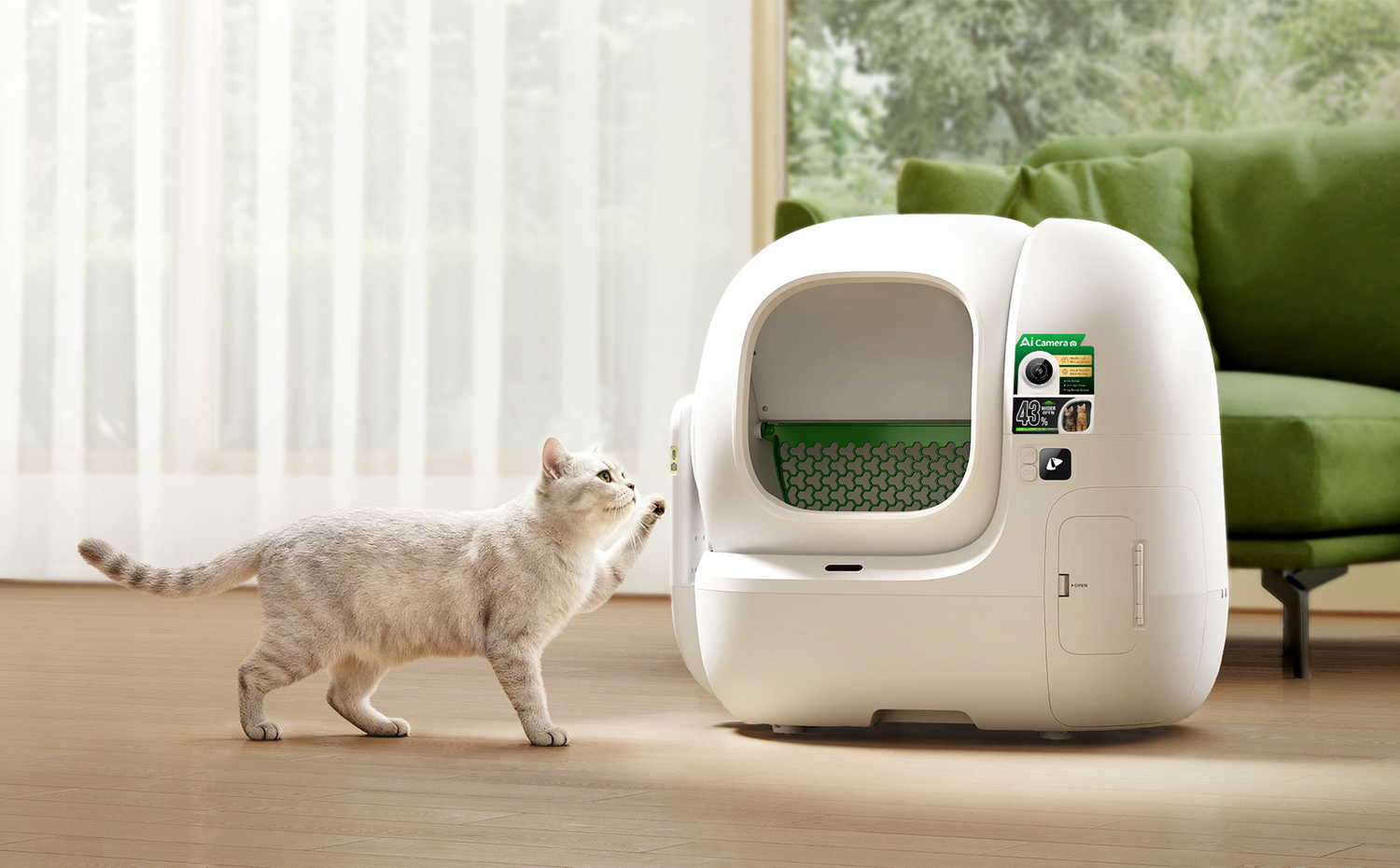
The entry should remain accessible at all times, regardless of the drum’s position, and must never be fully enclosed by the structure.
How to verify:
Run a full cleaning cycle and check whether the entrance ever becomes blocked. Then unplug the device mid-cycle to confirm that the cat can still enter and exit freely at any stopping position.
Rule 2: Zero Pinch Points and Shear Angles
A safe cyclinder design eliminates angles or shear points between rotating components and the waste bin.
How to verify:
Observe whether any gaps form between the drum and surrounding structure while it rotates. True safety relies on structural design—not sensors—and avoids creating any hazardous contact points.
PETKIT's Structural Safety Engineering: Four Product Architectures
All four PETKIT models follow the same principle: safety ensured by structural design, implemented through different engineering approaches:
Incomplete Gear System (PETKIT PuraMax 2, PETKIT Purobot Max Pro 2):
Mechanical hard stops limit drum rotation to 210°. At this boundary, gear disengagement physically prevents further rotation, keeping the entrance perpetually open. Safety is achieved through structural design, not sensor dependency.
PETKIT Purobot Ultra:
The auto-packing system and waste chamber positioned rearward allow horizontal drum rotation. This maintains front-facing entrance access throughout the cleaning cycle with zero angular hazards.
PETKIT Purobot Crystal Duo:
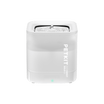
Featuring an open-top design, it eliminates enclosed spaces and rotating pinch zones entirely. Waste is removed through a horizontal raking motion, which avoids the formation of any pinch or shear points by design. Sensors provide an added layer of protection by pausing operation when a cat approaches.
Comparative Safety Overview: PETKIT Automatic Litter Boxes
| Product | Structural Safety Approach | Sensor Safety Features | Ideal Household Scenario |
|---|---|---|---|
| PETKIT Purobot Ultra | X-axis drum rotation maintains front-facing entrance; continuous interior surfaces eliminate shear angles | Proximity, weight, and Hall sensors detect cat presence (approaching/entering/exiting/abnormal dwell); | High-risk individuals requiring proactive health monitoring: post-surgical recovery, chronic conditions, senior cats; multi-cat households needing precise individual identification (prolonged stays, frequency changes) |
| PETKIT Purobot Max Pro 2 | Incomplete gear prevents the drum from rotating into a fully enclosed position. | Weight, proximity, and Hall sensors detect cat approach/entry/exit; immediate stop when cats approach during operation | Highly active/curious cats: kittens, adolescents, multi-cat households with playful/chasing behavior; mechanical hard stops physically eliminate entrance closure risks |
| PETKIT PuraMax 2 | Identical incomplete gear structure to Max Pro 2 ensures entrance remains front-facing and accessible at any stopping angle | Proximity, weight, and Hall sensors detect cat approach/entry/exit; immediate stop on anomalies | Single or dual-cat households seeking baseline safety; incomplete gear provides foundational protection as an entry-level automatic litter box |
| PETKIT Purobot Crystal Duo | Open-structure, drum-free design: cats occupy fully open space; horizontal push-rake cleaning eliminates all angular pinch points | Detection sensors trigger immediate stop when cats enter | Open-space preference; accessibility needs; health monitoring on a budget |
Why Physical Structure Is the Only Reliable Safety Standard
While sensors like infrared, weight, and Hall detection help pause operation when a cat is nearby, they are not foolproof.
-
Response delay: Detection, signal processing, and motor stop—even within milliseconds—still involve reaction time
-
Environmental impact: Dust buildup, wear over time, or signal interference can affect accuracy
-
Detection limits: Certain angles or smaller cats may not always be reliably detected
Structural safety works differently. Instead of reacting to risk, it prevents it from happening in the first place. By physically limiting how the device can move, the entrance can never rotate into a fully enclosed or hazardous position—regardless of sensor performance or power state. This means safety is built into the design itself, not dependent on detection.
How to Check If a Litter Box Is Truly Safe (Before You Buy)
Not all safety is built the same. Here are a few simple ways to understand how a litter box is designed to protect your cat.
Step 1: Power-Off Stop Check
Turn off the device during operation and observe where it stops.
If the entrance becomes blocked or forms tight gaps, the system relies heavily on sensors to prevent accidents.
✓ What to look for:
The entrance remains open and accessible at any stopping position.
Step 2: Sensor Dependency Awareness
Consider what would happen if sensors failed or were obstructed.
A well-designed product should remain safe due to its physical structure—not only because sensors stop it.
✓ What to look for:
The design itself prevents full closure or trapping, even without active detection.
Step 3: Gap & Movement Check
Observe how the device moves and whether any tightening gaps are created during operation.
✓ What to look for:
Smooth, continuous surfaces with no areas that could tighten or trap objects during movement.
Safety Starts with Design
The safest automatic litter boxes don’t just react to risk—they are designed to avoid it altogether. Instead of relying solely on sensors, true safety comes from structural decisions: keeping the entrance accessible and eliminating pinch points by design. These principles make safety consistent, predictable, and independent of external factors.
At PETKIT, our product lineup is built around this philosophy. From mechanically limited rotation systems to fully open, drum-free designs, each solution is created to provide a safer and more reliable experience for cats in different living environments.
If you’d like to learn more about these four models, feel free to check out our previous article: 2026 PETKIT Best Automatic Litter Boxes: Ultimate Buying Guide.