

For most people, the two main concerns about keeping a cat in an apartment are: Is there enough space? Will it smell?
Compared to dogs, cats are naturally better suited for small indoor spaces. They don't need daily outdoor walks and prefer a stable, quiet environment. So space is usually not the real issue.
But what about odor after bringing a cat home?
The answer is: Yes, you can have a cat without noticeable odor.
In fact, most bad odors are not caused by small living spaces, but by failing to identify the true sources of the smell.
This guide will walk you through:
- Where apartment cat odors come from
- How to eliminate them effectively
- How to choose an automatic litter box for odor control
- Litter box placement tips
All designed to help apartment cat owners enjoy both feline companionship and a fresh, clean home.
What Are the Real Sources of Cat Odors in an Apartment?
Many people start deep cleaning as soon as they smell something. But different odor sources require different solutions. In an apartment, odors typically come from four main sources.
1. Saturated Litter: The Most Overlooked Chronic Odor
Sometimes the litter looks clean, but there is a faint, lingering smell in the room.
This usually means the litter has reached its absorption limit. It may look fine on the surface, but inside, it can no longer trap odors.
Key point:
- Mild but persistent odor
- Slowly builds up in small, enclosed spaces
- Over time, creates hard-to-remove smells embedded in the box itself
2. Fecal Odor: Short Burst, Easy to Control
This smell is direct and spreads quickly but doesn't last long.
Main Causes:
- Not scooping the litter box in time
- Poor ventilation that traps the smell indoors
Key point:
- Strong but temporary
- Concentrated near the litter box
- Easily improved with timely cleaning
3. Urine Ammonia Smell: The Most Stubborn Source
This is the hardest odor to deal with in apartment cat ownership.
It happens when cat urine:
- Leaks out of the litter box
- Sticks to the plastic surface of the box
- Seeps into carpets, baseboards, or flooring
Key point:
- Sharp and persistent ammonia smell
- Hard to remove with regular household cleaners
- Air fresheners only mask the smell temporarily
4. Hidden Odors: The Most Subtle but Most Impactful
Sometimes there is no obvious bad smell, but the overall air feels stale or stuffy. This usually results from multiple factors working together:
- Cat hair and dander absorbing ambient odors
- Dust buildup in textiles and corners
- High indoor humidity
- Lack of cross-ventilation
Key point:
- No single identifiable odor source
- Overall air quality feels "off" or less fresh
- Long-term impact on living comfort
Summary
Cat odor is not a single issue, it's a combination of multiple sources. Once you identify and address each one properly, even a small apartment can stay fresh and odor-free.
How to Eliminate Litter Box Odor in an Apartment (Step by Step)
Masking odors with fragrance doesn't solve the root problem. The key is eliminating odors at the source. Follow these steps in order.
Step 1: Finding Where the Smell Is Coming From
If a specific area (corner, carpet edge, wall base) smells strongly, it is likely urine residue.
Why? The odor molecules are not floating in the air—they are physically embedded in surfaces.
What is the best way to remove cat urine odor?
Use an enzyme cleaner:
- Fully saturate the affected area.
- Let it sit (enzymes require time to break down uric acid crystals).
- Wipe clean and allow it to dry.
Note: Regular detergents or vinegar solutions often fail to break down the proteins in cat urine effectively.
Step 2: Control Litter Box Odor at the Source
The litter box is the primary and most consistent odor generator in an apartment.
Manual Method:
- Scoop 1–2 times daily
- Keep litter depth appropriate and dry
- Do not let waste sit for more than a few hours
Advanced Solution:
How Does an Automatic Litter Box Help Control Odor?
For busy schedules, an automatic litter box helps by mimicking immediate human intervention. Instead of waiting for you to come home, the device:
- Detects when the cat leaves via sensors.
- Separates waste clumps from clean litter through a rotating sifting mechanism.
- Seals the waste inside a closed container or drawer.
This process turns delayed cleaning into immediate odor containment, which is crucial in an apartment where air volume is limited.
Step 3: Clean Residual Odors From the Air
Even after addressing the primary sources, some odor particles may linger in fabrics and air.
Key Actions:
- Regularly vacuum and remove cat hair from floors, carpets, and sofas (hair traps odor).
- Ensure daily ventilation—open windows for at least 10–15 minutes for cross-flow.
- Place activated charcoal bags or an open box of baking soda near the litter area (but out of cat's reach) to passively absorb airborne particles.
How to Choose the Right Litter Box for Apartments
Your litter box choice directly determines how easy odor control will be. For apartment living, focus on these three factors:
- Space Efficiency: Compact footprint that fits in corners, under side tables, or in bathroom nooks.
- Odor Elimination System: A system that actively neutralizes or seals odors, not just filters them.
- Ease of Maintenance: Simple waste disposal process that doesn't release smells back into the room during cleanup.
If you're comparing specific models and want a detailed breakdown of features like drum size, safety sensors, and odor-sealing technology, explore our 2026 PETKIT Ultimate Buying Guide for Automatic Litter Boxes.
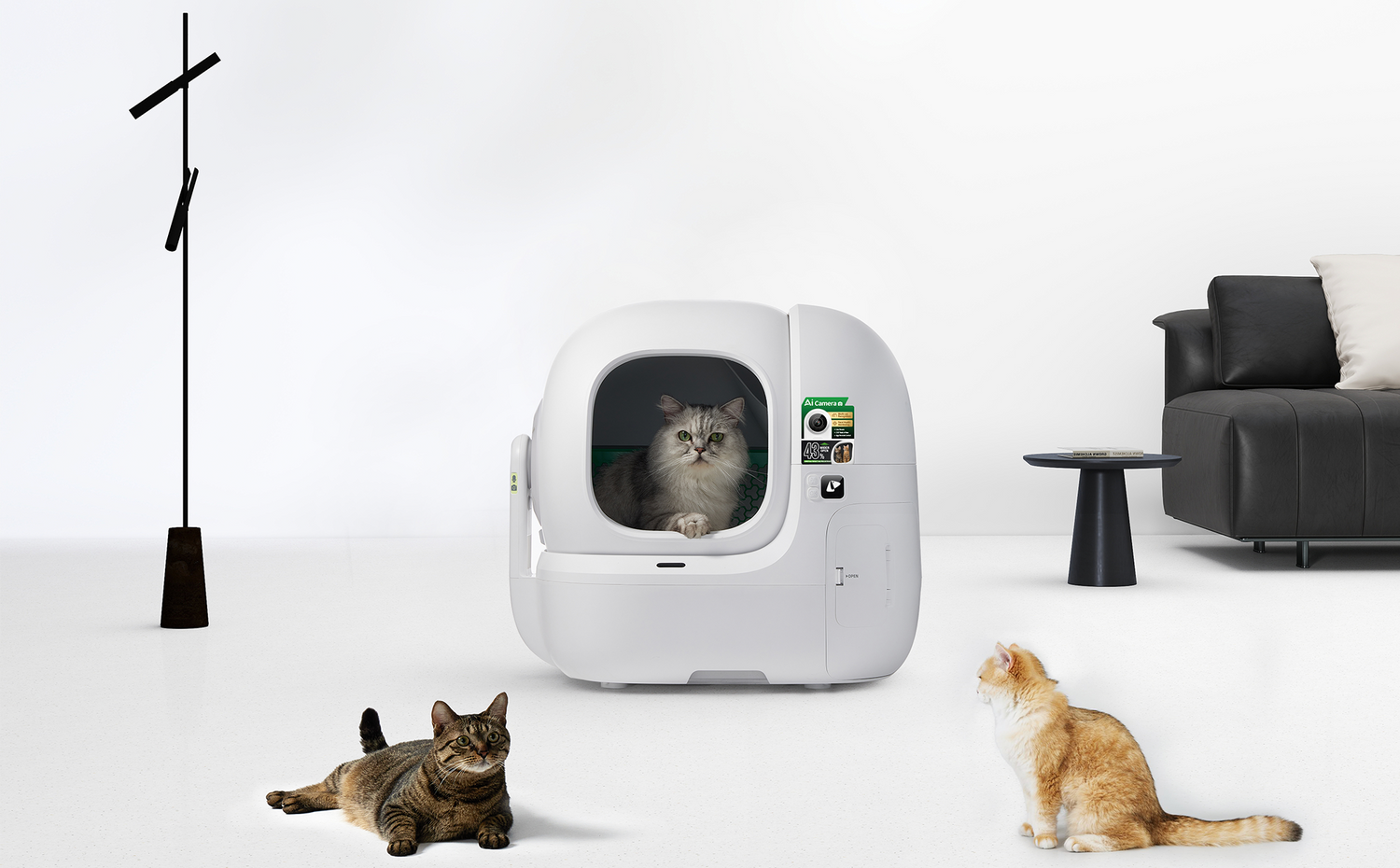
Why Is the PETKIT Purobot Max Pro 2 Recommended for Apartment Cat Owners?
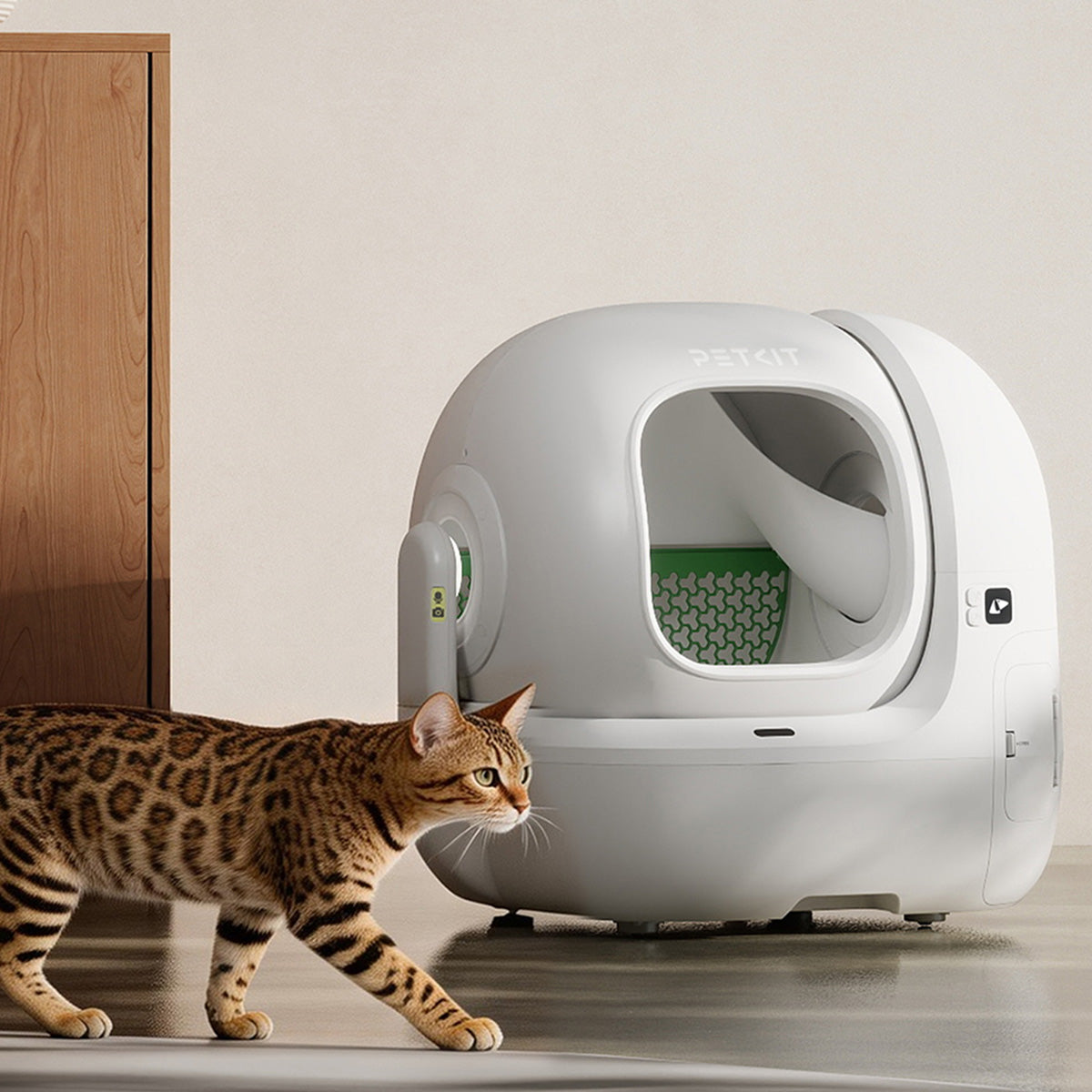
After comparing various options, this model demonstrates several features particularly well-suited to the mechanical and chemical challenges of odor control in small spaces.
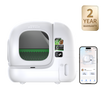
How can PETKIT Purobot Max Pro 2 Automatic Litter Box control odor?
- Active Chemical Decomposition: It uses the pet odor eliminator N50. Rather than simply using a passive carbon filter that saturates over time, this module actively breaks down ammonia compounds (NH3/NH4+) at a molecular level.
- Sealed Waste Containment: An 8L sealed waste drawer prevents the diffusion of odor from the collected waste pile back into the room air—a common flaw in open-top or flap-door boxes.
- Supplemental Air Treatment: The N60 module refreshes the cylinder air while releasing a subtle mint fragrance to maintain a baseline of freshness for up to 45 days.
How Does Smart App Control Reduce Odor?
- Adjustable Cleaning Delay: You can set a delay from 1 minute to 1 hour. This prevents the machine from rotating while odor particles are still freshly disturbed right after the cat exits.
- Waste Covering Mode: The drum rotates partially to cover waste with clean litter before the main sifting cycle. This minimizes the exposed surface area of the waste during the cleaning process.
- Sealed Bag Disposal: The waste bin uses a drawstring bag design that allows you to seal the bag completely before opening the compartment door. This results in almost zero odor release during maintenance.
Where Should You Place the Litter Box?
Placement directly impacts how odors behave and travel. Choose wisely based on airflow.
Recommended Locations:
- Well-Ventilated Bathrooms: The exhaust fan helps create negative pressure, pulling odors outside.
- Balconies (Weather Permitting): Excellent for immediate dispersion.
- Laundry Rooms: These areas are usually separated from main living spaces and have utility access.
What Locations Should You Avoid?
- Enclosed Cabinets or Closets: Traps moisture and odor, creating a concentrated litter box smell that clings to the cat's fur.
- Kitchens: Hygiene concerns regarding airborne particles near food prep areas.
- Right Next to Food and Water Bowls: Cats have an instinctive preference to separate their toileting area from their feeding area.
How to Improve Odor Control with Simple Add-Ons?
Place a small bowl of activated charcoal or a bamboo charcoal bag on a shelf near (but above) the litter box area to scrub the air passively. Maintain airflow even in winter by cracking a window slightly.
FAQ: Apartment Cat Odor Control
Q1: Are automatic litter boxes suitable for apartments?
Yes, especially for busy people or those sensitive to smells. They reduce the frequency of manual scooping and seal waste immediately, which is critical in a confined space where odors cannot easily dissipate.
Q2: Can I put baking soda in cat litter to reduce apartment smell?
Yes, in small amounts. Mix a thin, even layer into the fresh litter at the bottom of the tray (do not just sprinkle on top where it creates dust clouds). Baking soda acts as a mild base to neutralize acidic urine odors and is generally safe for cats in moderation.
Q3: Why does my apartment still smell even after I scoop the litter box?
This is often a sign of litter saturation or plastic absorption. If the litter itself is too old, it loses the ability to trap ammonia molecules. Additionally, plastic litter boxes develop microscopic scratches over time where bacteria and urine residue hide. Try fully replacing the litter (not just topping off) and deep-cleaning the empty box with an enzyme cleaner.
Q4: Will odors get worse if I have multiple cats in a small apartment?
Not if you follow the right methods.
- Follow the "number of cats + 1" rule for the total count of litter boxes.
- Scoop more frequently or use a large-capacity automatic litter box designed for multi-cat households.
- Improve ventilation and use a dehumidifier if humidity is high.
- Clean accidents immediately with enzyme cleaner.
Odors can be well controlled even with multiple cats.
Q5: Is an automatic litter box worth it for one cat in an apartment?
Yes, particularly for apartment living. An automatic litter box removes waste immediately and seals it, preventing the odor buildup that often goes unnoticed until you return home. By closing the "odor window" between the cat's bathroom break and your manual scooping, it makes a significant difference in maintaining consistently fresh indoor air.
Final Thoughts
Living in a small apartment doesn't have to mean worrying about limited space or unpleasant smells. By understanding the distinct sources of cat odor—from saturated litter to hidden ammonia—and addressing them with targeted solutions like enzyme cleaners, proper ventilation, and technology-assisted litter management, you can easily enjoy both the companionship of your cat and a fresh, comfortable living environment.
We hope this guide helps everyone who dreams of keeping a cat in a small apartment. May you soon welcome your own furry companion home with confidence.